
If you are on your IVF journey, you know it can be overwhelming. With so many add-ons and options, it’s natural to wonder whether something like acupuncture is worth considering. According to The Human Fertilisation and Embryology Authority, acupuncture is the second most-used IVF add-on after supplements in 2024. We also used it at different points in our journeys, but the big question always remained: can acupuncture actually improve your chances of success?
In this blog, we go beyond the hype and look at what science really says about acupuncture and IVF—plus have a closer look at the Paulus Protocol, a method of using acupuncture to support implantation. If you are curious about the facts you are in the right place.
What Is Acupuncture—and How does it relate to Fertility?
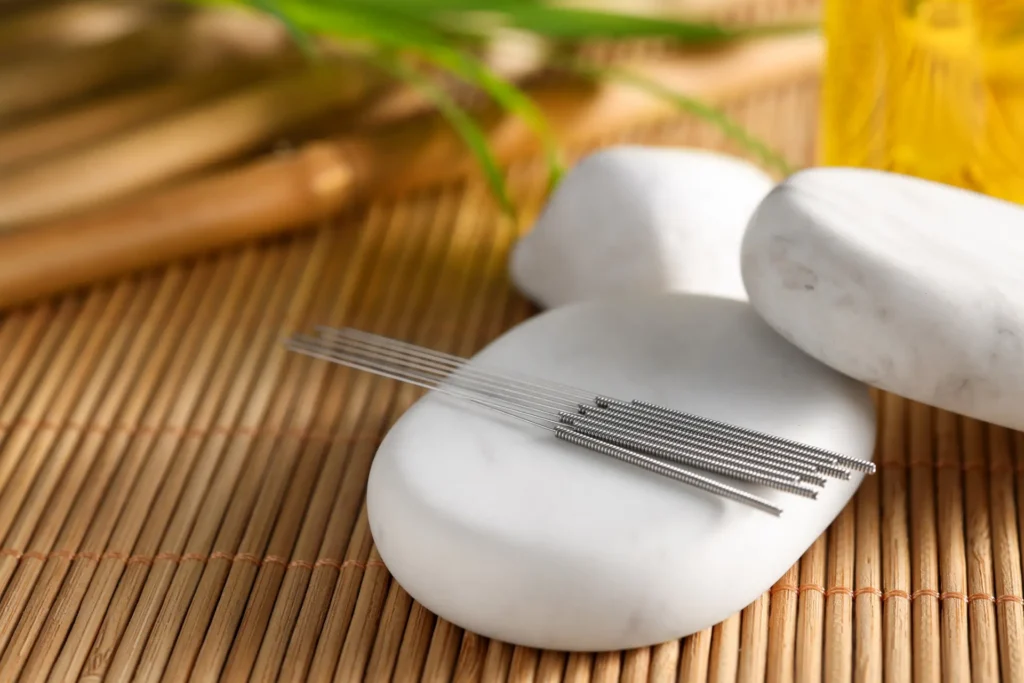
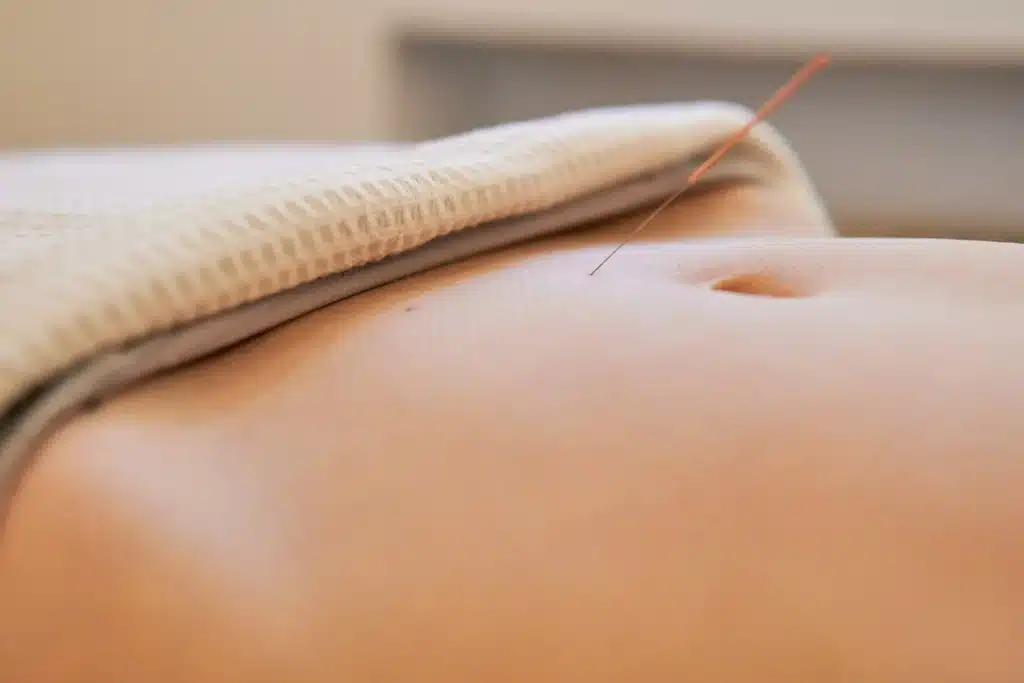
Let’s start by understanding what acupuncture is. Acupuncture is a treatment rooted in Traditional Chinese Medicine that involves inserting thin needles into specific points on the body to rebalance energy (qi) and promote healing. In the context of fertility, acupuncture is thought to:
- Improve blood flow to the uterus and ovaries
- Balance hormones needed for ovulation and implantation
- Relax the uterus and reduce contractions during embryo transfer
- Lower stress and cortisol levels, which can negatively impact IVF outcomes (see our blog on managing stress and IVF)
What Does the Research Say?
Let’s have a closer look at the evidence surrounding acupuncture and IVF. There have been two recent key studies which we’ll look more into
Study 1: Large-Scale Meta-Analysis (2022) involving 7,676 women undergoing IVF or ovulation induction.
Key findings:
- Live birth rate: 34% higher in the acupuncture group
- Clinical pregnancy rate: 43% higher
- Higher implantation and biochemical pregnancy rates
- No significant effect on number of eggs retrieved, embryo quality, or miscarriage/ectopic rates
- Minor side effects only – bruising or local pain were more common in acupuncture groups, but none were serious
In this study, timing and frequency made a difference. Acupuncture given just before and after embryo transfer appeared most effective, suggesting that more sessions at the right time could lead to better results.
Study 2: Targeted Embryo Transfer Support (2020) following 72 women with unexplained fertility undergoing IVF.
The acupuncture group received three sessions: one a week before embryo transfer, one 30 minutes before, and one 30 minutes after.
Results
- Positive pregnancy test: 63.9% (vs. 33.3% in control)
- Clinical pregnancy: 63.9% (vs. 33.3%)
- Ongoing pregnancy: 55.6% (vs. 30.6%)
- Live birth: 52.8% (vs. 27.8%)
This study found that acupuncture also had a major impact on emotional well-being. Anxiety levels dropped by almost 50%, compared to a 28% drop in the control group—supporting the theory that reducing stress levels may play a role in improved outcomes.

The Paulus Protocol: A Pioneering Approach
During our IVF journeys, we used acupuncture to generally improve our cycle outcomes. We both understood the importance of having acupuncture on transfer day but what we didn’t realise until recently was there was a specific, research-backed approach designed for transfer day called the Paulus Protocol. Introduced in 2002, it’s one of the earliest and most influential acupuncture protocols used alongside IVFdeveloped for IVF support. In a study of 160 women, those who followed the protocol had a 42.5% pregnancy rate, compared to 26.3% in the control group.
Protocol Details
Two acupuncture sessions:
- 25 minutes before embryo transfer
- 25 minutes after embryo transfer
Needles were placed at specific points.
Before Transfer
Body Points: PC6, SP8, LIV3, DU20, ST29
Ear Points: Right: Shenmen (55), Uterus (58)
Left: Endocrine (22), Subcortex (34)
After Transfer
Body Points: ST36, SP6, SP10, LI4
Ear Points: Right: Endocrine (22), Subcortex (34)
Left: Shenmen (55), Uterus (58)
These points are designed to relax the uterus, improve blood and energy flow, and calm the nervous system.
Real-World Adaptations
It may sound tempting to just replicate the exact timing of the Paulus Protocol, but many clinics don’t have in-house acupuncturists or allow outside practitioners during embryo transfer. So check with your clinic and see what’s possible.
As a workaround, you can opt to schedule sessions on the morning of and soon after transfer. We both did versions of this. Keep in mind though that this approach hasn’t been formally studied, but it is much more accessible.
What Are the Limitations?
While research is encouraging, it’s not definitive. Here are a few considerations. Be aware of:
Placebo effect – some studies found smaller differences when comparing acupuncture to “sham” acupuncture (needles placed at non-therapeutic points), suggesting the benefits could be partly psychological. Other older studies have had similar results.
Variation in protocols – Not all acupuncture methods are equal. Success may depend on the experience of the practitioner, timing, point selection, and number of sessions.
Lack of standardisation – Acupuncture isn’t regulated or consistent across all clinics, so results can vary.
So Should You Try Acupuncture For Your Next IVF Cycle?
Based on the research and our experiences, here’s our takeaway.
Pros
-
May improve uterine blood flow and hormone balance
-
Can help reduce anxiety and cortisol levels
-
Some studies shows higher pregnancy and live birth rates
Cautions
-
Results can vary between individuals and studies
-
Some benefits may be due to expectation/placebo effects
-
Not regulated or standardised across clinics
Final Thoughts
We’ve both tried acupuncture as part of our own fertility journeys, and it’s something we genuinely found helpful. The growing research suggests that when timed well, acupuncture can support your body during IVF, reduce anxiety, and possibly improve your odds of success.
Acupuncture may improve blood flow, support hormone balance, and ease some of the emotional stress that comes with infertility. Studies show that it not only boosts pregnancy rates, but also significantly reduces anxiety—something we personally experienced as well. For us, acupuncture felt calming and grounding, helping to lower stress and cortisol levels.
We’re particularly encouraged by the research showing that the timing of acupuncture around embryo transfer can make a difference. Alison went full in on acupuncture for her last transfer and it was successful. If you’re considering it, we believe the embryo transfer period appears to be the most strategic time to start.
We recommend you approach any complementary therapy with care – ask questions and read beyond the headlines. And remember, not all acupuncture protocols are created equal. Be sure to choose a licensed acupuncturist who has experience in fertility to ensure safe and effective care.
Acupuncture may not be a guarantee, but it could be a meaningful tool to bring a little more peace, and perhaps a little more hope, to your IVF journey.
Research resources
The information in this blog is supported by peer-reviewed studies and scientific research. If you’d like to learn more or explore the details, feel free to check out the sources below.
1. Hullender Rubin, L., Cantwell, R., & Kwong, J. (2019). Acupuncture for female infertility: An overview of systematic reviews. Complementary Therapies in Medicine, 46, 81–86. https://www.ncbi.nlm.nih.gov/pmc/articles/PMC6918533/
2. Humaidan, P., Kol, S., & Papanikolaou, E. G. (2020). GnRH agonist for triggering final oocyte maturation: Time for a change of practice? Taiwanese Journal of Obstetrics & Gynecology, 59(2), 183–190. https://www.sciencedirect.com/science/article/pii/S1028455920300188
3. Paulus, W. E., Zhang, M., Strehler, E., El-Danasouri, I., & Sterzik, K. (2002). Influence of acupuncture on the pregnancy rate in patients who undergo assisted reproduction therapy. Fertility and Sterility, 77(4), 721–724. https://pubmed.ncbi.nlm.nih.gov/11937123/
4. JHS Acupuncture. (n.d.). Acupuncture & IVF – The Paulus Protocol. https://jhsacupuncture.co.uk/acupuncture-researchacupuncture-ivf-paulus-protocol/
5. Manheimer, E., Wieland, L. S., Cheng, K., Berman, B. M., Sharma, S., & Lao, L. (2022). Effects of acupuncture on rates of pregnancy and live birth among women undergoing in vitro fertilisation: Systematic review and meta-analysis. BMJ, 376.