
If you’ve been navigating IVF, you may have noticed something frustrating: the focus often lands almost entirely on women – age, egg quality, hormone levels, lifestyle changes. And while those factors do matter, they are also only part of the picture.
What’s becoming increasingly clear (and more openly discussed) is that male fertility in IVF plays a role in up to half of all infertility cases. So it’s not just a small side note, it’s a major part of the picture.
IVF can often help overcome male factor challenges. At the same time, healthy embryos need both healthy eggs and healthy sperm, and sperm quality directly affects how embryos develop and how likely IVF treatment is to succeed. When male fertility is overlooked, cycles can take longer, outcomes may be poorer, and the emotional and financial toll can quietly build.
In this post, we’ll explore everything you need to know about sperm and IVF – from how sperm quality is assessed, to how it influences outcomes in the lab, and what practical steps you can take to improve your chances. Because sperm quality isn’t a “nice to know” detail – it’s half the equation.
Whether you’re just starting your journey or facing IVF challenges along the way, taking a closer look at male fertility can bring clarity, solutions, and renewed hope. The good news is, there’s a lot that can be done.

A Deep Dive into Male Fertility
The male reproductive system is designed to do three main things: produce sperm, help them mature, and deliver them efficiently. It’s a finely balanced system and small disruptions can have a bigger impact than many realise.
The key players
- Testes – produce sperm and testosterone
- Epididymis – where sperm mature and are stored
- Vas deferens – transports sperm during ejaculation
- Seminal vesicles & prostate gland – add fluids that nourish and protect sperm
- Penis & urethra – deliver sperm outside the body
During ejaculation, sperm mix with fluids from the prostate and seminal vesicles to form semen. While semen volume might seem important, many (like we did) don’t realise that only about 3–5% of semen is actually sperm. The rest is made up of proteins, enzymes, sugars, and nutrients — all essential for helping sperm survive and do their job.
A practical note
The first portion of the ejaculate contains the highest concentration of sperm. Missing this during sample collection can affect semen analysis results.
A Few Fun (and Helpful) Sperm Facts
Human sperm are tiny — but fruit flies have sperm up to 1,000 times longer
Sperm determine the sex of the baby (X = girl, Y = boy)
Sperm can survive up to 5 days inside the female reproductive tract
Sperm don’t have no sense of direction — they swim constantly and rely on chance and biology
They face multiple obstacles inside the female body, including cervical mucus and microscopic barrier
What Is Sperm Quality?
You’ll hear the term “sperm quality” used a lot during IVF, but it’s not always clearly explained. So what is it?
Sperm quality refers to the health and functionality of the sperm – its ability to reach and fertilise an egg. It’s not just about having lots of sperm available, it’s about having the right kind in the right quantity.
As part of IVF, your clinic will perform a semen analysis, and you’ll likely receive a report filled with unfamiliar terms and numbers. Let’s break down what those results actually mean for IVF success and why they matter.
Key Parameters Assessed in a Semen Analysis
Sperm Count (Concentration)
This measures how many sperm are present per millilitre of semen.
- Normal: 15 million sperm/mL or more (WHO guidelines)
- Low counts can be linked to hormonal imbalances, blockages, genetic factors, or lifestyle influences
Motility (Movement)
Sperm need to move (and move well) to reach and fertilise an egg. Motility is classified as:
- Rapidly progressive (best)
- Slowly progressive
- Non-progressive
- Immotile
- Target: At least 30% progressively motile sperm. Progressive motility has been shown to correlate with pregnancy rates
- Motility is very temperature-sensitive, which is why proper lab handling and transport conditions matter so much.
Morphology (Shape and Structure)
A healthy sperm has three key parts:
- An oval head
- A strong midpiece (which contains the mitochondria, the sperm’s energy source)
- A straight tail
The head shape is particularly important. Abnormal head shapes can make it harder for sperm to penetrate the egg and achieve fertilisation.
To be classified as “normal,” all three parts must meet strict criteria. Even borderline forms are counted as abnormal which is why morphology numbers often look lower than expected.
Vitality (Are the Sperm Alive?)
Vitality measures how many non-moving sperm are still alive.
- Especially useful when motility is low
- Helps distinguish between live but immobile sperm and dead sperm
- Assessed using special dyes that detect intact cell membranes
This information can point to underlying issues such as infection, inflammation, or immune-related problems.
Semen Volume & Viscosity
- Normal volume: 1.5 mL or more (WHO)
- Semen should liquefy within 30 minutes
- Thick or highly viscous semen can make it harder for sperm to move freel

What Actually Happens to the Sample in the Lab?
Have you wondered what actually happens after the sample is handed over to the lab? From initial handling and liquefaction to microscopic evaluation and advanced testing, here’s a look behind the scenes.
Collection & Preparation
- Sample collected, usually after 2–7 days of abstinence.
- Ideally collected at the clinic, but if done at home, keep a sample between 20°C and 37°C and deliver it within 30–60 minutes.
- If travelling with a sperm sample, keep the container close to your body, e.g. under the armpit.
Lab Assessment Timeline
First 5 minutes
- Sample volume is weighed
- Liquefaction is monitored
30–60 minutes post-collection
- Visual check of consistency and colour
- pH and viscosity measured
- Motility, concentration, and vitality assessed
- Morphology smears prepared
Within 3 hours
- Final concentration confirmed
- Further tests (e.g., microbiology, antibody testing)
Later that day
- Morphology reviewed
- Optional biochemical and inflammatory markers assessed.
Microscopy Methods
Light microscopy gives an overview of the sample, identifying clumping, debris, or mucus
High-magnification microscopy allows closer examination of sperm shape, movement, and the presence of other cells (such as white blood cells)

Sperm DNA Fragmentation: The Hidden Factor
Each sperm carries 23 chromosomes, and the egg provides the other 23. Together, they form the genetic blueprint for embryo development. But even sperm that look normal under the microscope can carry damaged DNA. This is known as sperm DNA fragmentation (SDF).
Understanding your SDF levels can be a hugely valuable part of fertility assessment – especially if you’ve experienced low fertilisation rates, poor embryo development, failed implantation, or unexplained IVF outcomes.
From our own experience, SDF was something we only explored after several failed cycles – and it turned out to be an eye-opener. It’s a significant, often overlooked contributor to male infertility, and one that can quietly undermine even well-run IVF cycles.
What Causes DNA Sperm Fragmentation?
- Oxidative stress
- Infections or inflammation
- Environmental toxins
- Ageing
- Lifestyle factors such as smoking, poor diet, and chronic stress
High SDF levels are associated with
- Poor embryo development
- Lower implantation rates
- Increased miscarriage risk
Several reliable tests have been used in clinical labs for over two decades to assess DNA fragmentation.
Common SDF tests
- TUNEL assay
- Comet assay
- Sperm Chromatin Dispersion (SCD) test
- Acridine Orange flow cytometry
If IVF hasn’t gone to plan, this is one of the first areas worth exploring.
Why the Embryologist and Lab Quality Matter
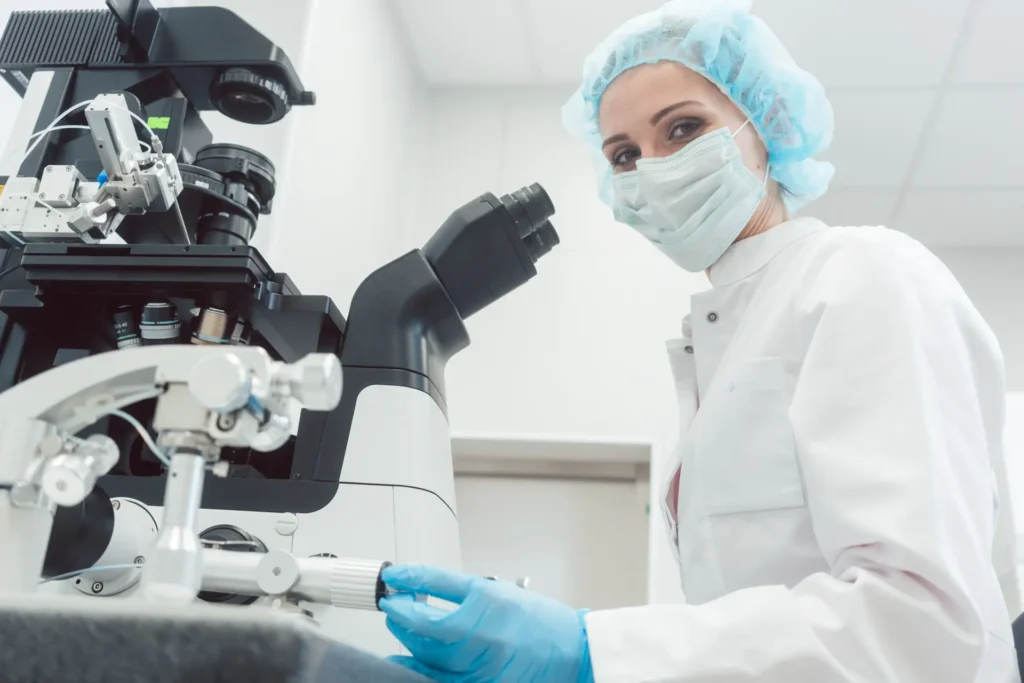
In IVF, particularly with ICSI (Intracytoplasmic Sperm Injection), the embryologist selects one single sperm to inject into each egg. Embryologists rely on international (WHO) guidelines, focusing on:
- Sperm movement (motility)
- Shape and structure (morphology)
- Head size, symmetry, and the presence of vacuoles (small holes in the head)
That decision matters. The reality is that there isn’t time to assess every sperm in detail. The selection becomes partly subjective and relies heavily on:
- The embryologist’s experience
- Lab conditions such as light, temperature, timing, and air quality
- The tools and techniques available in the laboratory
This is why lab quality and expertise play such a crucial role in IVF outcomes, especially when sperm quality is borderline.
ICSI has revolutionised male-factor infertility by allowing fertilisation even with very low sperm counts. But it doesn’t bypass sperm quality entirely.
Poor-quality sperm leads to
- Failed fertilisation
- Poor-quality embryos
- Lower implantation rates
- Higher miscarriage risk
The WHO provides reference ranges based on fertile men, but IVF-specific benchmarks can be more helpful. For example, research from Göttingen University suggests minimum sperm quality benchmarks associated with better IVF outcomes
- Volume: 10 million sperm/mL
- Motility: 30%
- Progressive motility: 15%
- Normal morphology: 20%
These numbers help can help guide your expectations and treatment decisions.
Improving Sperm Quality: What You Can Do
Here’s the encouraging part. Unlike eggs, sperm are constantly being produced. It takes roughly 42–76 days for sperm to develop and mature which means changes you make now can improve sperm quality within a few months. And lifestyle changes really can make a difference.
Factors worth paying attention to
- Testicular size – Smaller testicles can be linked to lower sperm production and abnormal shapes
- Hormone levels – Imbalances can affect both production and quality
- Medication – Some antidepressants (SSRIs) and alpha-blockers can affect ejaculation
- Steroids or unregulated supplements –These can suppress sperm production
- Infections or inflammation
- Smoking, alcohol, poor diet, chronic stress
- Advanced paternal age (40+)
Here are some practical steps to support sperm health
- Maintain a healthy weight
- Exercise regularly (but avoid overtraining)
- Stop smoking and limit alcohol
- Avoid excess heat (hot tubs, tight underwear, laptops on laps, heated car seats)
- Eat an antioxidant-rich diet
- Consider fertility supplements (with medical guidance)
- Prioritise sleep and stress management
- Avoid unnecessary medications and steroids
- Treat underlying medical issues, such as varicoceles, if present
Even small changes, applied consistently, can lead to meaningful improvements.
Advanced Testing When You Need More Answers
If you’ve already made changes and still aren’t seeing improvement, or if IVF cycles have failed without a clear explanation, deeper testing can provide valuable insight.
A DNA fragmentation test is often the first and most informative next step.
Beyond that, you may want to ask your clinic about:
- Oxidative stress testing
- Genetic or chromosomal assessments
- Reactive oxygen species (ROS) levels
- Acrosome reaction testing
- CASA (Computer-Aided Sperm Analysis)
- Emerging technologies, including AI-based sperm selection tools
Not every test is needed — but having the right tests at the right time can prevent unnecessary cycles, and all the overwhelm that comes with that.

Final Thoughts: Don’t Overlook the Male Factor in IVF
When it comes to IVF, sperm quality isn’t a side issue, it’s half the equation. From count and movement to shape and DNA integrity, each aspect plays a role in fertilisation, embryo development, implantation, and pregnancy outcome.
The good news is that sperm are continuously produced, and many male fertility issues are reversible or improvable with the right steps. Sperm regenerate, and improvements are often possible with the right lifestyle changes, targeted testing, and medical support.
Whether you’re just starting IVF or reassessing after previous cycles, don’t overlook the male factor. A simple semen analysis, or more advanced testing when appropriate, can provide clarity, guide treatment decisions, and significantly improve your chances of success.
With the right information, support, and personalised care, addressing sperm quality can be one of the most empowering steps in your IVF journey.
Research resources
The information shared in this blog is supported by The World Health Organization as well as the following peer-reviewed studies. If you’d like to learn more or explore the details, feel free to check out the sources below.
1. World Health Organization. (2021). WHO laboratory manual for the examination and processing of human semen (6th ed.). Retrieved from https://www.who.int/publications/i/item/9789240030787
2. Esteves, S. C., Sánchez-Martín, F., Sánchez-Martín, P., Schneider, D. T., & Gosálvez, J. (2021). Comparison of sperm DNA fragmentation levels in semen and spermatozoa selected by swim-up and density gradient centrifugation. Reproductive Biology and Endocrinology, 19, 213. Retrieved from https://www.ncbi.nlm.nih.gov/pmc/articles/PMC8706130/